

From Jack in the Box and Pizza Hut to Dunkin' and TGI Fridays, the first day of MediaPost's Brand Insider Summit in Santa Barbara revealed a common challenge. The next competitive advantage may have less to do with technology and more to do with the people, processes, and trust required to make it useful.
By Chris Marine, Founder & CEO


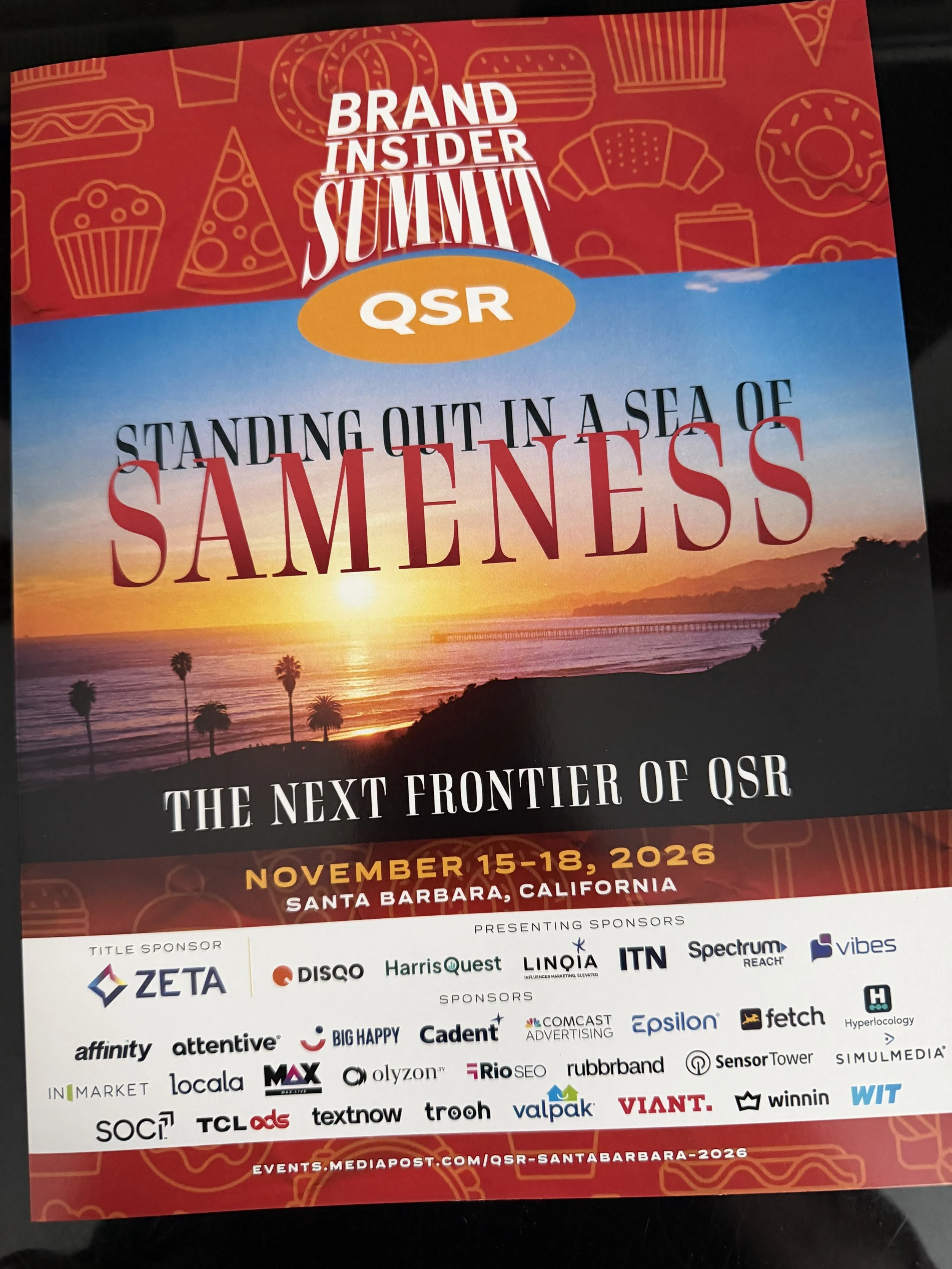
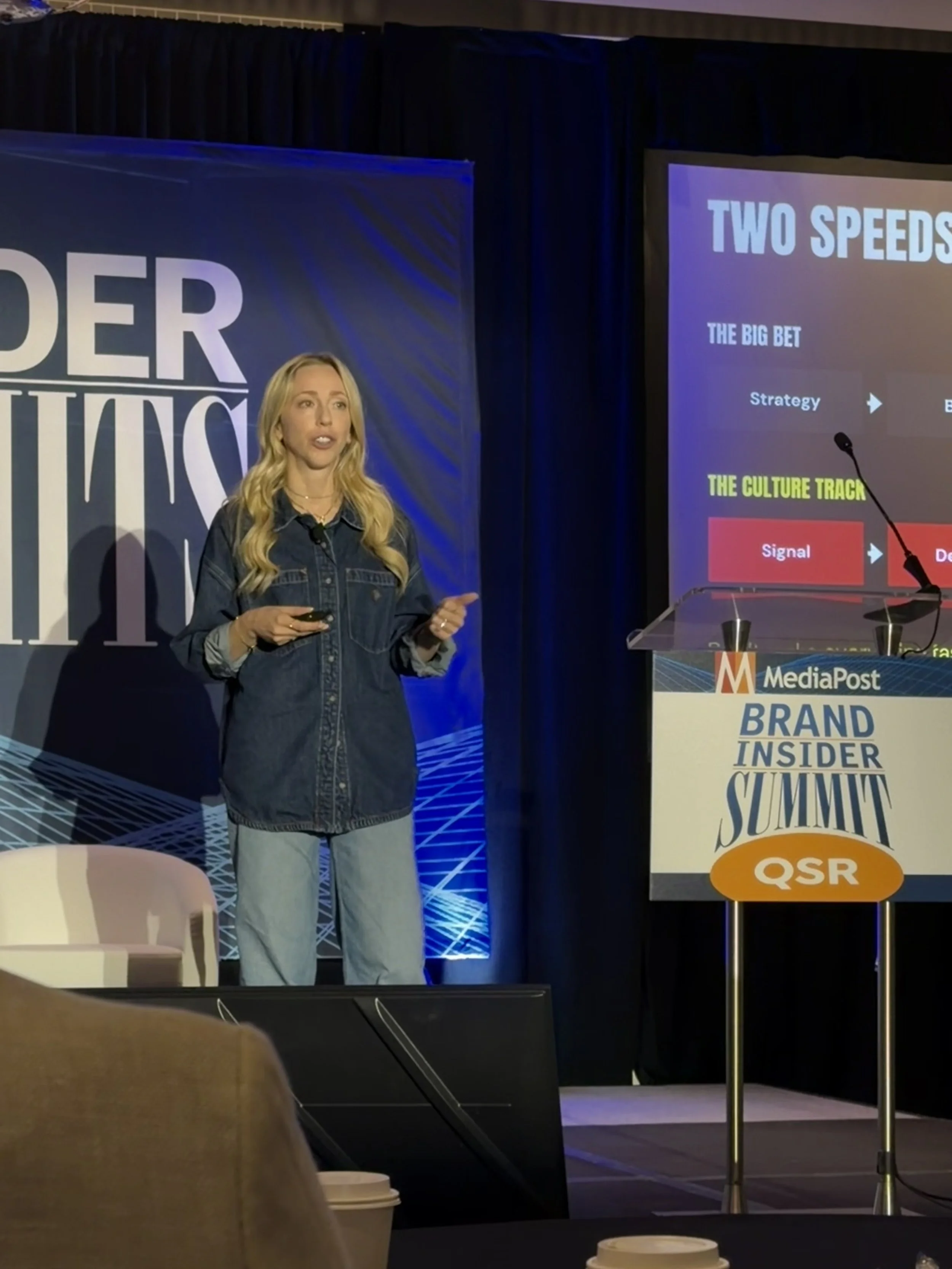
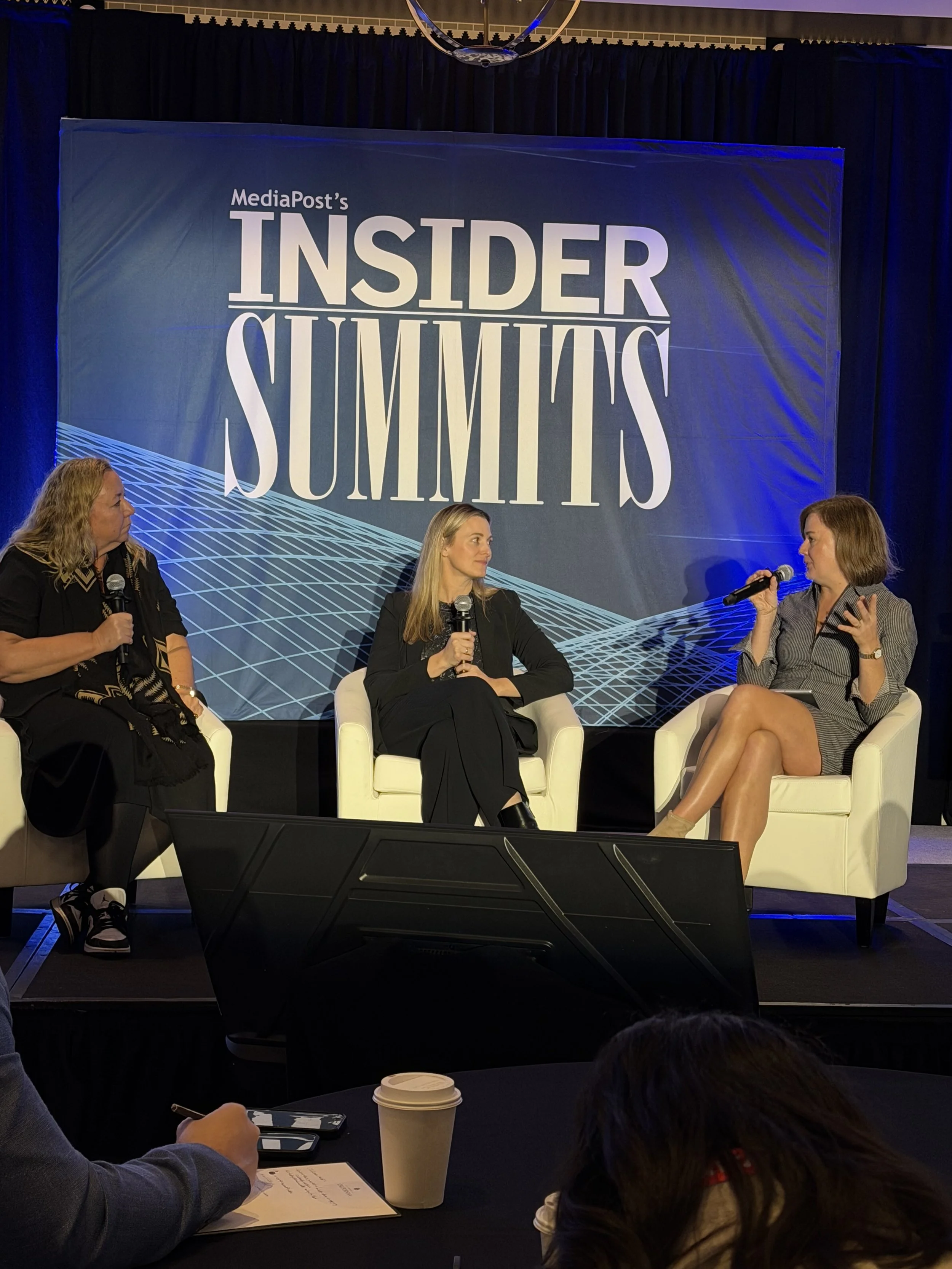
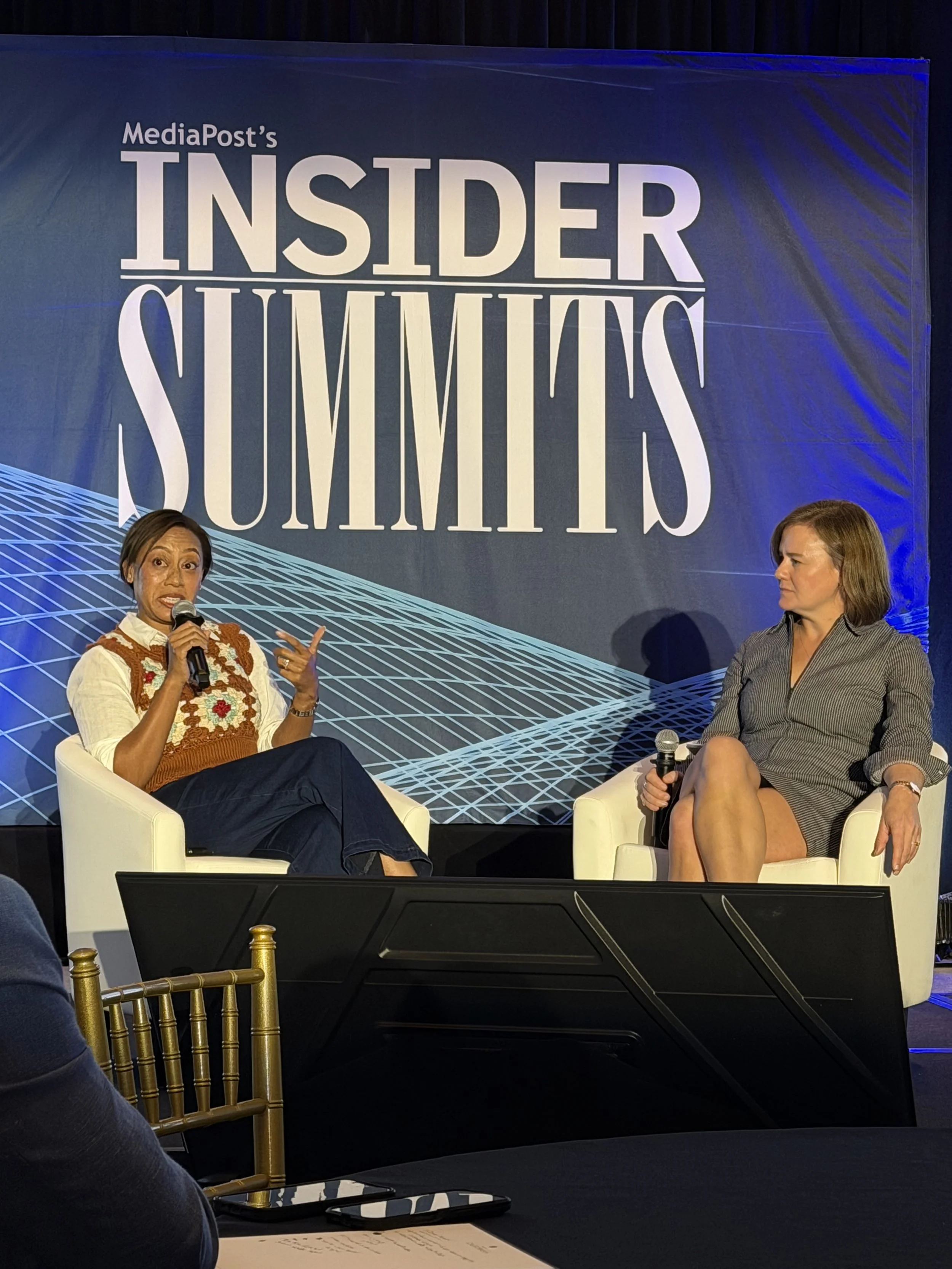
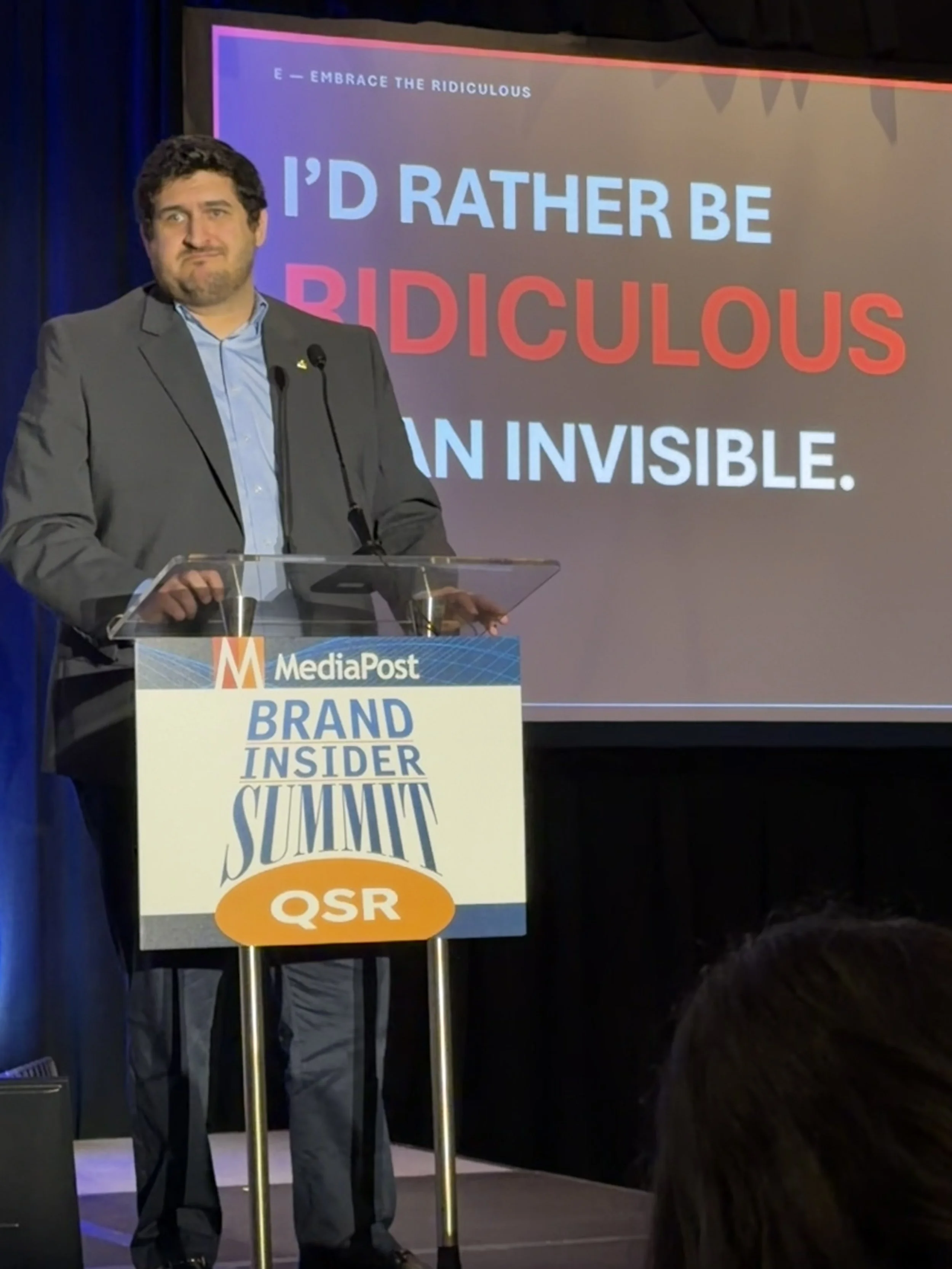
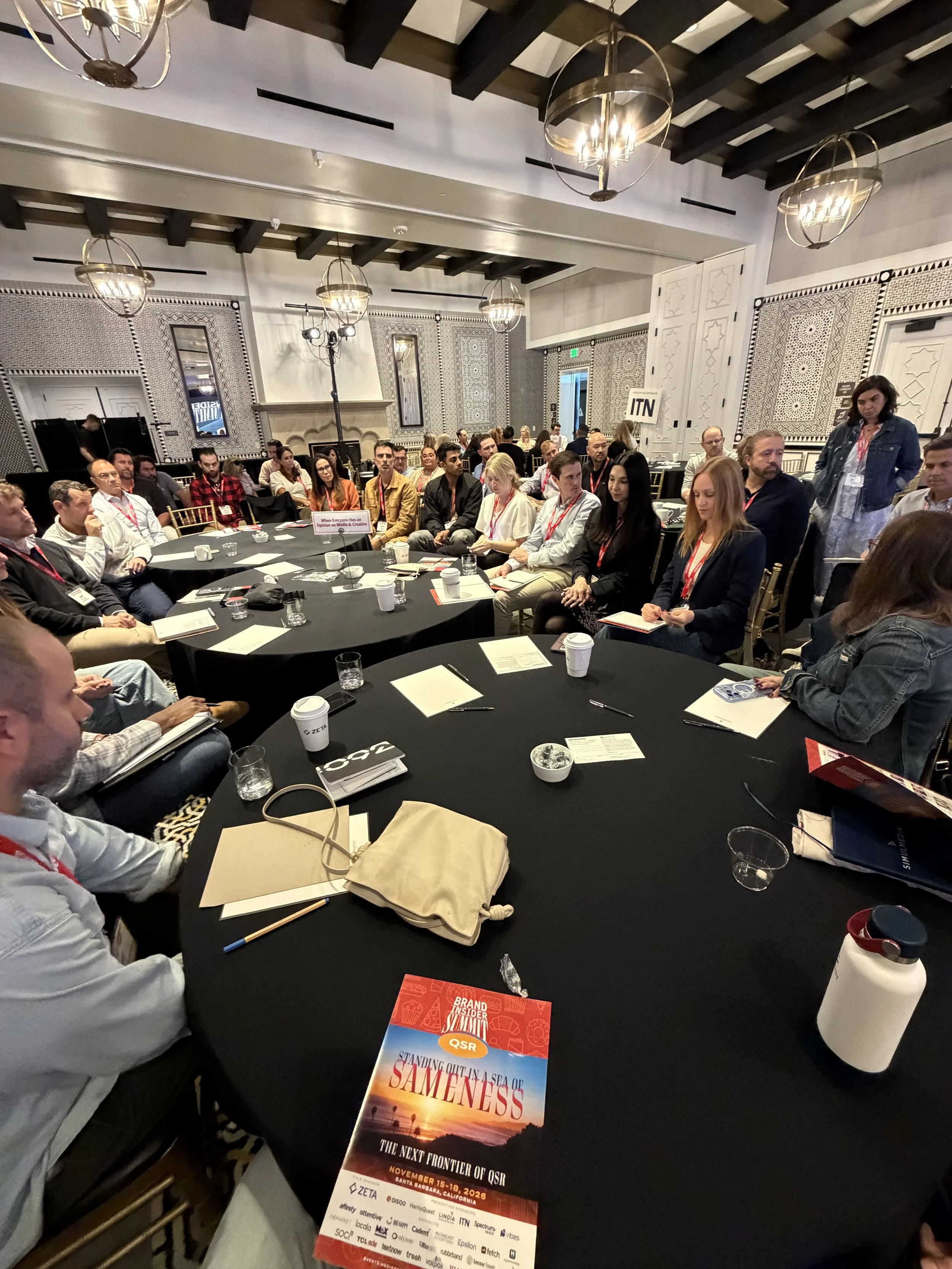
The hardest part of restaurant marketing as we round out 2026 might not be summarized by figuring out what's happening. It's deciding what to do about it. That was the thread connecting several conversations during the opening day of MediaPost's Brand Insider Summit: QSR in Santa Barbara. Across four sessions featuring leaders from Jack in the Box, Pizza Hut, Brix Holdings, Dunkin' franchisee Quality Brand Group, and TGI Fridays, the brands, budgets, and business circumstances varied considerably. The challenges, however, were extremely familiar. Legacy brands fighting to remain relevant. Marketing teams expected to respond to culture faster than their organizations can approve a campaign. Franchisees navigating economic realities that don't always align with national marketing ambitions. And leaders trying to distinguish between what their dashboards say is working and what is actually bringing customers back through the door.
The economic backdrop makes these conversations particularly urgent. According to the National Restaurant Association, the average restaurant's operating expenses increased an estimated 36% between 2019 and 2026, while 42% of operators reported being unprofitable in 2025. Consumers remain interested in dining out, but affordability pressures are changing how frequently they visit and what they're willing to spend. For national restaurant marketers, that creates a difficult balancing act between defending today's transactions and investing in tomorrow's brand. For franchisees, it means every marketing dollar is under scrutiny. It's no wonder the conversation is shifting from what else marketers can do to how they can become more disciplined about what actually matters.
Jack in the Box CMO Katelyn Zborowski offered perhaps the clearest illustration of the challenge. Despite 96% national brand awareness, Jack in the Box has just 40% usage. The brand isn't fighting obscurity. It's fighting indifference. Zborowski described a company on the cusp of a comeback, with the recognition that sustainable growth must be earned incrementally rather than manufactured through a sudden increase in advertising. She also shared that fewer than 10% of the brand's customers account for a disproportionate share of revenue, presenting an uncomfortable reality for any marketer. Habit can look a lot like loyalty until another restaurant opens down the street. Being familiar isn't the same as being preferred, and being preferred isn't necessarily the same as being loved.
Christopher Houston, director of digital marketing at TGI Fridays, described a very similar challenge from a brand emerging from bankruptcy. Fridays had plenty of awareness, even if much of the recent attention came with negative sentiment. What it lacked was a compelling contemporary reason to be chosen. Houston traced the brand's identity back to its founding in 1965, not to replicate the experience of the past but to recover the boldness that originally differentiated it. Nostalgia could remind consumers that Fridays existed. It couldn't, by itself, convince them to return. That distinction matters because too many legacy brands confuse the emotional equity they've accumulated over decades with permission to remain unchanged. History is an asset, but it isn't a strategy.
The response from both brands has been to rethink where ideas originate and how quickly they travel. Zborowski argued that brands without the budgets of category giants need ideas compelling enough to generate conversation before paid media enters the picture. Jack in the Box's Simpsons Treehouse of Horror activation demonstrated the potential. Glow-in-the-dark collectible cups sold at roughly seven times forecast before paid advertising even began, driven by social activity, influencers, and publicity. The response created an unexpected supply chain problem, but it also challenged conventional assumptions about what makes a campaign successful. The idea created demand before the media plan had a chance to amplify it. Importantly, Zborowski wasn't arguing against paid media. She described a deliberate distinction between communicating with highly engaged customers through owned channels and CRM, and investing in full-funnel paid media to reach the less frequent customers whose behavior the brand needs to change. It's a more disciplined way of thinking about investment, where media serves the audience strategy rather than the other way around.
But an interesting idea is only as useful as an organization's ability to execute it. Zborowski described developing two distinct operating tracks at Jack in the Box. One supports the rigorous annual planning and financial accountability required of a publicly traded franchise system. The other, through an internal initiative called JACK Lab, is designed to monitor cultural signals and respond to opportunities within 24 hours or less. She compared the reactive function to a newsroom, where teams begin each day prepared to respond to developments they couldn't have anticipated the night before. As someone who began their career in media as a broadcast journalist, that analogy resonated with me. Newsrooms don't operate without structure. They operate with defined responsibilities, editorial judgment, established standards, and people who understand when a story demands immediate attention. The lesson for marketers isn't that everything should move faster. It's that organizations need to know which decisions require rigor and which require speed, then build the systems to support both.
That distinction surfaced again during a conversation about earning cultural credibility with Brandi Stansbury-Moody of Brix Holdings and Taiya Ryan of Pizza Hut. Their examples challenged the idea that relevance can be purchased through celebrity partnerships or participation in whatever trend happens to be circulating online. A Pizza Hut and KFC popcorn chicken concept began as an April Fools' social post in the UK, but consumer enthusiasm signaled an opportunity worth exploring further. At Friendly's, interest from Joe Jonas and BJ Novak created possibilities rooted in their genuine affinity for the brand rather than a manufactured endorsement. The speakers also acknowledged that some opportunities should be rejected, whether because of reputational risk, poor brand alignment, or limited team capacity. A cultural moment can be enormously popular and still be wrong for the business. The goal shouldn't be to participate in everything. It should be to recognize the moments where a brand has something credible to contribute.
There's an important lesson here for the marketing industry, not just QSR, that is increasingly fascinated by moving at the speed of culture. One thing our campers around the fire are adamant about, and was largely said without being explicit today, is that speed without judgment is just a faster way to waste resources. Cultural relevance and the chase for virality requires understanding the audience, having a clear brand perspective, and knowing what you're trying to accomplish. Sometimes an activation is intended to drive immediate sales. Other times the objective is to strengthen brand affinity or create new occasions for consumption. Those are different business objectives, requiring different investments and measurement frameworks. Yet they're often treated as interchangeable because impressions and engagement are easier to report than shifts in consumer behavior. Technology can help identify a trend. It can’t independently determine whether that trend deserves a place in a brand's strategy.
All the speakers were terrific, really opening up to the intentionally small room of marketing leaders, but the most revealing session I think came from Ashleigh Griffith of Quality Brand Group, one of Dunkin's largest franchise operators, overseeing nearly 200 locations across five states. Her argument was refreshingly grounded in something marketers frequently overlook… which is the employees responsible for bringing a campaign to life. National content creators can develop remarkable creative, we can then invest in sophisticated media with that, and distribute every imaginable piece of point-of-sale material. But the person preparing the product, greeting the customer, and making the recommendation is often the most influential part of the experience. Griffith described how Quality Brand Group built an employee ambassador program, drawing from approximately 3,000 team members, to strengthen the connection between national campaigns and local restaurant execution. During a promotion featuring Dunkin's Spider Donut character, the team created a direct communication experience between the character and employees, helping them understand the product and their role in promoting it. Griffith reported that sales of the featured donuts doubled compared with the prior year.
The more interesting result may have been what happened beyond the transaction. Griffith shared that 60% of employees who participated in the ambassador program were still with the company, with some expressing an ambition to become general managers because they felt invested in building the brand. That retention figure alone doesn't establish causation, but it raises an important question about how the industry values employee engagement as a marketing capability. Griffith's team also uses ambassadors as a source of local intelligence, helping identify community opportunities a national marketing department might never consider. And critically, those learnings don't remain isolated experiments. They're documented in playbooks, measured against restaurant performance, and shared with the broader brand so smaller franchisees can benefit from systems they might not have the resources to develop themselves.
This is where the conversation about process becomes especially interesting. A playbook isn't inherently exciting. Neither is a decision matrix, a consistent measurement framework, or a clearly documented approval process. But those are the systems that allow organizations to scale good judgment. They create room for creativity without requiring every franchisee, marketing manager, or agency partner to reinvent the process. Griffith also emphasized that a restaurant needs to deliver on speed, accuracy, and friendliness before inviting more customers through local marketing. That's a critically important reminder. Marketing can generate demand, but it cannot sustainably overcome a disappointing customer experience. When the promise made in advertising exceeds what the restaurant can deliver, additional media investment may simply accelerate the problem.
The emphasis on local relevance was another recurring theme. Pizza Hut's Taiya Ryan discussed the need to adapt nostalgia to the realities of modern families rather than attempting to recreate the dining experiences of the 1980s and 1990s. She also pointed to a franchise-led collaboration between Pizza Hut and IKEA in Korea, inspired by the tiny plastic tables traditionally used to keep pizza boxes from touching the food, as an example of local creativity becoming relevant far beyond its original market. Griffith described the value of employees who know their regular customers and understand the communities surrounding their stores. Houston, when asked about local relevance across TGI Fridays' international footprint, explained that headquarters provides the broader brand engine while restaurant teams help adapt it to individual markets. Different examples, but a common principle that local knowledge isn't something that should be bolted onto a national strategy after the fact. It should be part of how that strategy is developed.
At Campfire, we've long believed that geographic targeting and local relevance are not interchangeable. Reaching someone within two miles of a restaurant doesn't mean you've established a meaningful connection with that community. The brands that succeed locally understand the relationships, institutions, media environments, and cultural behaviors that influence the people they're trying to reach. That can include local publishers, community organizations, neighborhood partnerships, and the employees who interact with customers every day. It's also why the renewed discussion about dining rooms and physical gathering spaces felt significant. In a category increasingly optimized around drive-thru efficiency, digital ordering, and delivery, several speakers returned to the value of the human experience. Convenience matters enormously, but so does belonging. The two shouldn't be competing objectives.
Houston offered another useful example of how these principles translate into measurable business activity. By shifting Fridays toward a social-first approach, introducing platform-specific creative strategies, and giving a small team greater authority to respond in real time, he reported a 43% increase in engagements per post, with roughly 90% of the brand's social activity generated organically. But he was equally focused on what happened beyond the engagement. Fridays has been refining CRM segmentation, simplifying its digital ordering experience, and removing friction from its loyalty program. He reported website visits increasing 32%, social-driven add-to-carts for online orders rising 250% year over year, and loyalty sales increasing 6.5% year over year in October. Houston was careful not to present every result as proof of causation. That distinction deserves recognition. The purpose of measurement isn't to manufacture credit for marketing. It's to help organizations understand where attention is translating into action and where the customer experience still needs work.
Across these presentations, one thing became increasingly clear. Nobody appeared to be asking for another dashboard. The conversation was about building better processes around the intelligence brands already have. How should data inform decisions? Who is empowered to act on those decisions? How do national strategies account for local conditions? What gets documented so a successful experiment becomes a repeatable capability? And perhaps most importantly, how do leaders create an environment where people and agency partners can challenge assumptions without fear of being punished for exposing an uncomfortable truth?
Zborowski made that last point particularly well when she described the people required to engineer a turnaround. She wants optimists willing to entertain ambitious ideas, but also truth tellers who aren't afraid of what the consumer data reveals. Jack in the Box has been rebuilding its consumer insights and analytics capabilities, not because information alone will solve its challenges, but because the organization needs people prepared to confront what the information is telling them. Houston described a similar philosophy at Fridays, where a small, trusted team can make real-time social decisions without routing every response through layers of approvals. Neither approach suggests abandoning accountability. They suggest that trust and accountability work best when they reinforce one another.
There's a challenge in all of this for agencies, too. If the industry's most urgent problems concern decision-making, internal alignment, operational efficiency, and the ability to connect marketing activity to business outcomes, then the future relevance of agencies cannot rest solely on campaign execution. Buying media, producing assets, and managing platforms are important functions, but they are not sufficient definitions of strategic value. The opportunity is to become the partner that helps businesses establish better processes, connect information across departments, understand the relationship between brand building and commercial performance, and make more informed investment decisions. Sometimes that will mean recommending more media. Sometimes it will mean advising a client to improve the customer experience, strengthen measurement, or resolve an internal constraint before spending another dollar. The objective should be to improve the business, not simply expand the media plan.
The first day in Santa Barbara reinforced something we've been seeing firsthand across our clients and the industry at large. In the pursuit of speed, with teams stretched thin and budgets under greater scrutiny, the c-suite is asking marketers to do more, move faster, and make increasingly complex decisions with fewer resources. And somewhere along the way, the pressure to keep moving can come at the expense of clarity around what actually matters to the business. This isn't a challenge unique to QSR. It's an industry-wide tension, and one that technology alone won't solve. At Campfire, we've come to recognize that some of the greatest value we bring to our clients isn't found solely in the strategy we develop, the media we execute, or the results we report. It's in the processes we bring into their organizations. The systems, structure, and discipline that remove friction, alleviate the burden on internal teams, and create the space for better decisions. Because moving faster isn't inherently moving forward. And when clarity, process, and trust work together, speed becomes an advantage rather than another source of strain.
The brands finding their way forward aren't necessarily the ones with the most resources. They're the ones willing to confront what isn't working, establish a clear point of view, and empower teams to move with purpose - together, across their internal and external agency roster. They'll still need excellent creative. They'll still need sophisticated media strategy. They'll still need technology, measurement, and data. But those capabilities only become meaningful when the organization knows what it's trying to accomplish and trusts the people responsible for getting it there.
You can buy another platform, license another dataset, or automate another workflow. None of those investments can compensate for an organization that doesn't know what decisions it needs to make.
And without trust in your team, you're unlikely to build anything that matters.
